
Madjeston
Solar Farm
Generating Clean Energy in Dorset
Enviromena is preparing to submit a planning application to Dorset Council for a solar farm located on land off Standpitts Lane, Madjeston, Gillingham, Dorset, SP8 5RF.
The proposed solar farm will have a capacity of 30MW. It is expected to generate 46,500MWh of electricity per year, which is enough to meet the annual electricity needs of 18,600 average UK homes. The renewable energy generated will prevent an estimated 6,100tCO2e emissions per year, which is roughly equivalent to taking 3,100 cars off the road.
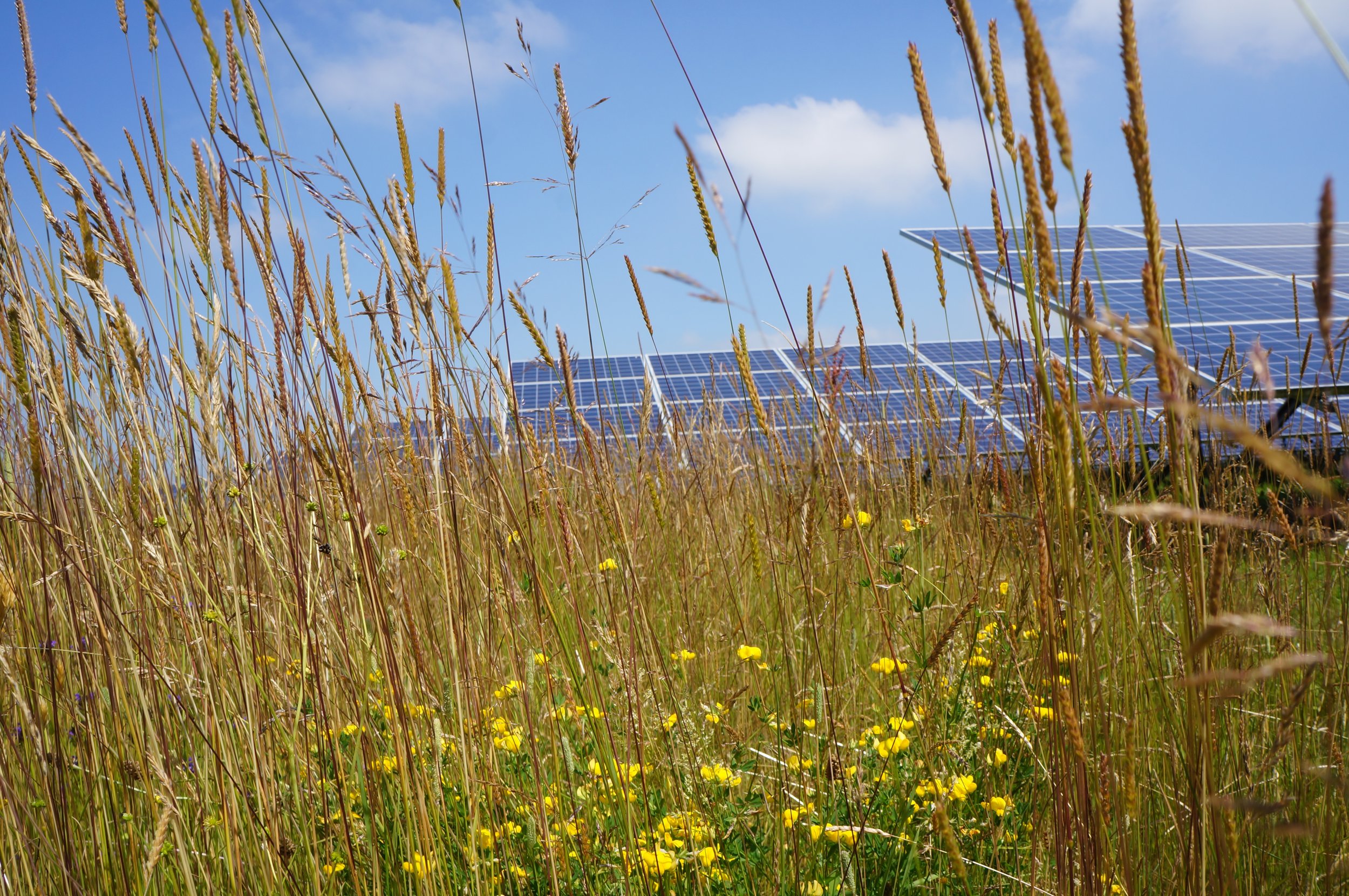
Where is the proposed site?
The Benefits
The solar farm will assist Dorset Council in reducing greenhouse gas emissions in line with national and local targets in response to the Climate Emergency.
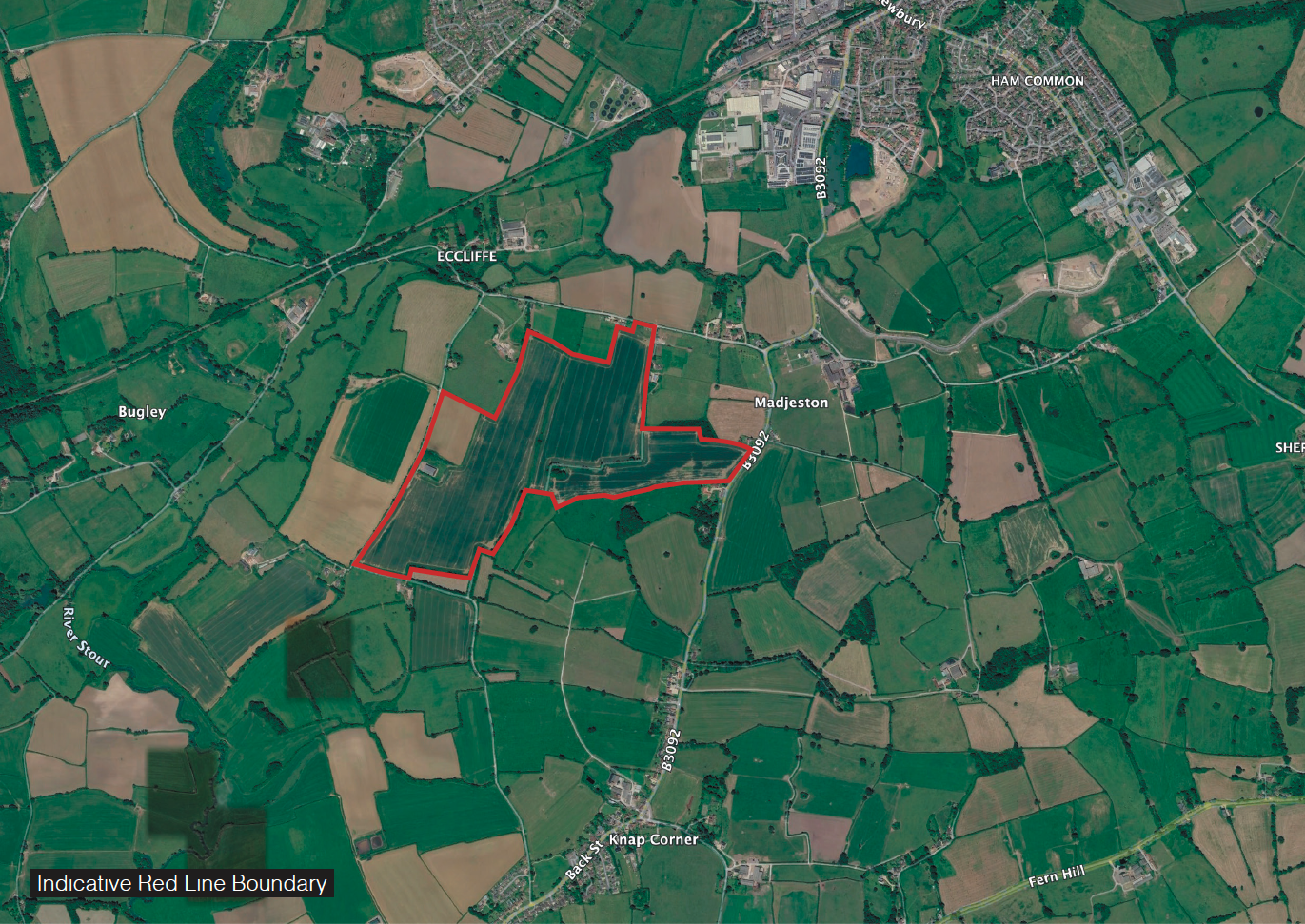
The project will deliver substantial biodiversity net gain (BNG). Existing trees and hedgerows will be retained and protected, with additional planting and habitat creation helping to strengthen local ecological networks.
The site comprises Grade 3b agricultural land and is therefore not classified as Best and Most Versatile (BMV) agricultural land. The solar farm will be a temporary development, allowing the land to be restored to agricultural use following decommissioning.
The proposal does not require the stopping or diversion of any public rights of way.
The project does not require Government subsidies.
The project will provide significant economic benefits to Dorset. Construction of the solar farm is expected to create valuable local employment opportunities during the build phase. Over the project’s lifetime, it will generate meaningful wages and economic value added for the Dorset economy, alongside approximately £125,000 per year in Business Rates for Dorset Council.
The project will also provide a Community Benefit Fund of up to £60,000, intended to support local community initiatives.
The project will support the local economy through the use of local suppliers and contractors during construction and long-term operation, helping to retain expenditure within Dorset and support local employment and skills.
This is a temporary development, allowing the land to rest for the period of operation. Decommissioning and full restoration of the site at the end of the development’s life will be secured through planning conditions.
Construction and Access
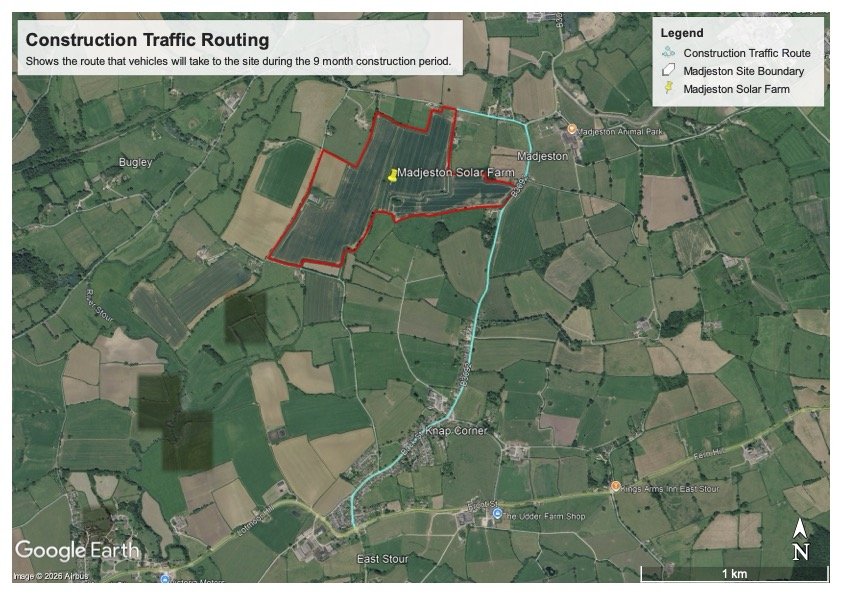
It is proposed that construction traffic will gain access to the site via the following route:
Construction vehicles will turn off the A30 onto the B3092 and travel northbound until the junction with the unnamed road is reached;
Construction vehicles will turn left off the B3092 onto the unnamed road and travel westbound until the junction with Standpitts Lane is reached;
Construction vehicles will turn left off Standpitts Lane into the site.
A Construction Traffic Management Plan (CTMP) and Transport Note has been prepared to accompany this application and to ensure the safety of all road users, including Public Rights of Way (PRoW) users, and to support visibility requirements.
Construction will take place over approximately nine months, with an average of six two-way HGV movements per day. In the context of existing traffic levels, this represents a very small and temporary increase in traffic. The route also has a very low recorded accident rate, with no identified existing road safety issues that would be exacerbated by the proposed construction traffic.
Once operational, the site will generate minimal traffic for occasional maintenance visits.
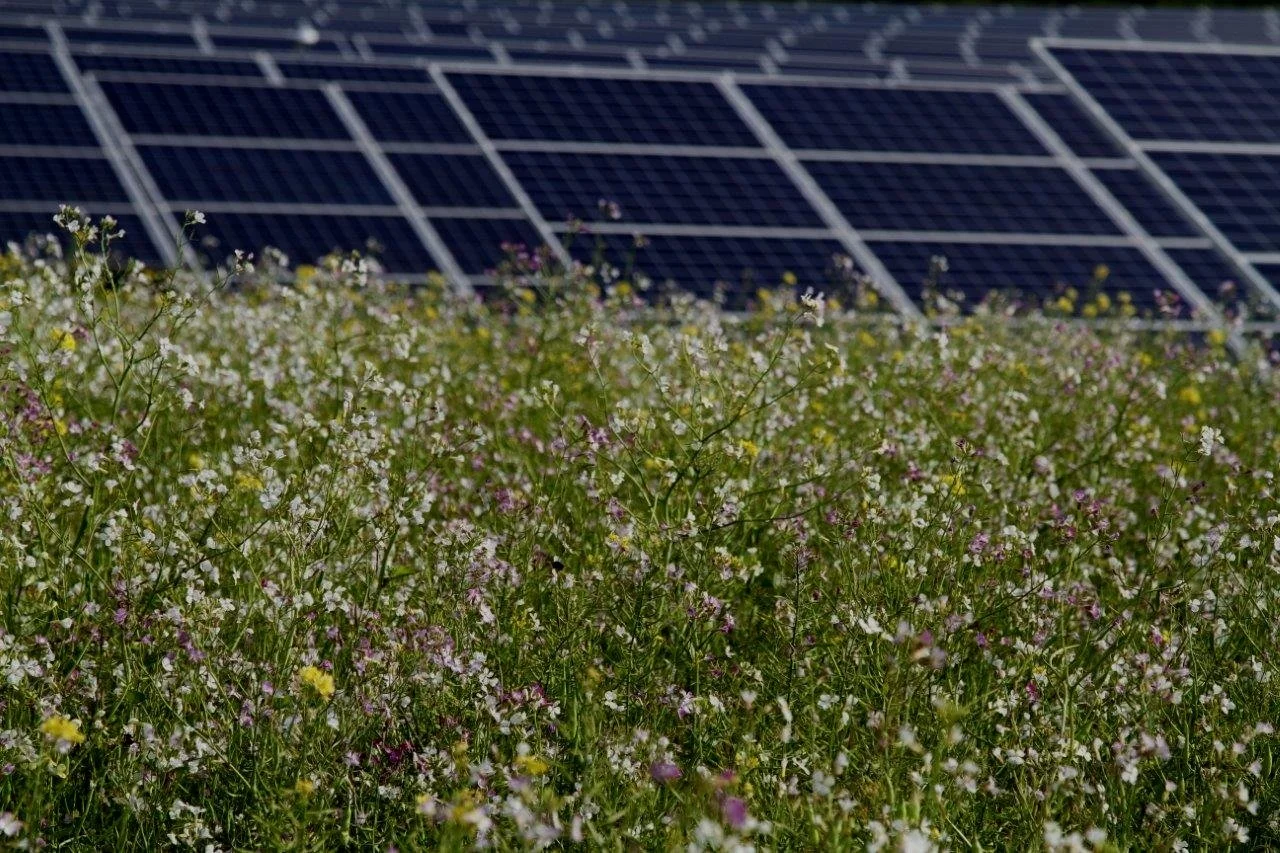
Climate Emergency and Energy Security
In 2019, Dorset Council declared a Climate and Ecological Emergency, recognising the urgent need to address climate change and biodiversity loss. Dorset Council has committed to becoming a carbon-neutral county by 2050, with renewable energy generation, including solar power, playing an important role in this transition.
The UK Government has set out an ambition to deliver Clean Power by 2030, with a significant increase in solar capacity needed to help meet this ambition and support the transition to a cleaner energy system. Recent global instability and volatility in international energy markets have also highlighted the importance of energy security and homegrown energy generation.
Projects such as Madjeston Solar Farm can therefore help support Dorset’s transition towards a cleaner and more resilient energy supply, while contributing to the UK’s wider energy security and reducing reliance on volatile fossil fuel markets.

About Us
Enviromena, the developer of this project, is a clean energy solutions company providing safe, affordable, and reliable solutions for growing sustainable power demands.
Headquartered in the UK, Enviromena has more than 18 years’ global experience in developing, designing, constructing, managing, and operating ground-breaking renewable energy projects.
Enviromena currently manages, operates and maintains nearly 400 megawatts (MW) of projects and has a further 3GW in construction and development across the UK and Italy.
FAQ
-
The Climate Emergency, the cost of living crisis and the energy crunch are all linked by how we generate, use and supply energy. We urgently need to generate energy from new, low cost, low carbon sources and solar is the lowest cost and quickest to deploy of all energy sources. It is currently one-ninth the cost of gas and less than one third of the cost of nuclear.
The proposed solar farm will generate renewable electricity integral to the UK Government’s overarching policy to provide significant reductions in national greenhouse gas emissions and improved energy security.
The UK Government has set out an ambition to deliver Clean Power by 2030, requiring a significant increase in solar capacity as part of the transition to a cleaner energy system. Madjeston Solar Farm will contribute to this national need for new renewable energy generation, helping to strengthen the UK’s energy security and support a more sustainable energy future.
We are committing long-term funding to bring forward renewable energy generation and low carbon programmes which we believe will help deliver a more sustainable future.
-
The solar farm is a temporary development and will not change the land classification. Once the solar farm is no longer in operation it will be decommissioned and the land will return to its previous agricultural usage.
-
The biggest long-term threat to food security is climate change and the increasing pressure it places on farming resilience and crop production.
The UK Government’s Food Security Report 2024 recognises that climate change poses a significant long-term risk to future food production. Solar parks currently account for around 0.1% of total UK land use. Even with the Government’s ambitions for a significant increase in solar generation, this would rise to only around 0.6% of UK land area, less than the amount currently occupied by golf courses.
-
"BNG is an approach to development. It makes sure that habitats for wildlife are left in a measurably better state than they were before the development. In England, BNG is mandatory under Schedule 7A of the Town and Country Planning Act 1990 (as inserted by Schedule 14 of the Environment Act 2021). Developers must deliver a BNG of 10%. This means a development will result in more or better quality natural habitat than there was before development.” (https://www.gov.uk/guidance/understanding-biodiversity-net-gain).
-
The site for Madjeston Solar Farm has been carefully selected as part of a detailed site assessment process.
The project is located in an area highlighted as potentially suitable for renewable energy development in Dorset Council's Emerging Local Plan.
Considerations have been made on all the following, to ensure this site is appropriate for our scheme: grid capacity, land availability, heritage assets, flood risk, ecology and landscape impact.
-
Solar panels have no moving parts and emit no sound. Inverters and transformers can emit very low-level sound, but these are sited away from houses and public rights of way and cannot be heard from more than a few metres away.
-
It is generally accepted that solar farms have an overall positive impact on wildlife, and this scheme will be no different.
Ecologists have carefully assessed the development proposals and concluded that, through the cessation of intensive agricultural activity, and an increase in the number and quality of available habitats, the solar farm will have an overall positive impact on biodiversity.
We are committed to generating a significant net biodiversity gain at Madjeston through the creation of new habitats to support local wildlife.
Existing hedgerows will be strengthened and new hedgerows will be planted to improve habitat connectivity across the site.
We will set aside a significant proportion of the land for habitats to support mammals, birds and invertebrates.
Further ecological enhancement measures such as bird boxes and bat boxes will be placed within the site to encourage those populations to prosper.
-
No. There is no policy presumption in national or local planning policy that supports this concern.
There is a presumption in favour of the development of ‘previously developed land’ for housing, but the NPPF definition of brownfield land is clear that this extends to “Land which is or was occupied by a permanent structure”. The Government’s planning practice guidance is clear that “solar farms are normally temporary structures and planning conditions can be used to ensure that the installations are removed when no longer in use and the land is restored to its previous use” thus voiding any route to claim the land is previously developed as a precursor to housing.
UK 2025 Solar Roadmap
The UK Government recently released the Solar Roadmap, outlining its strategy to deliver clean energy by 2030. Appendix 2 addresses common misconceptions about solar power in the UK. The following are key frequently asked questions sourced directly from the roadmap.
-
Solar is very effective in the UK as solar panels can operate efficiently even without direct sunlight. Whilst they are most effective on clear, sunny days, recent technological advancements mean they perform well on cloudy days too.
-
Solar is a versatile technology. The costs of solar have plummeted in the past decade, helping it become one of the cheapest technologies for new electricity generation in the UK and globally. In parallel, the efficiency of solar panels and other system components continues to improve. The combination of these factors make solar a great choice for households and businesses looking to reduce their electricity bills.
-
UK businesses and solar developers are expected to do everything in their power to remove any instances of forced labour from their supply chains. Legislation and guidance are already in place to help businesses take action against modern slavery, however, the UK Government are working collaboratively across Whitehall on this important issue to see where we can go further.
While the supply chains for solar panels are complex and difficult to audit, the UK and European industry have worked together to establish the Solar Stewardship Initiative. Its mission is to work collaboratively with manufacturers, developers, installers and purchasers across the global solar value chain to foster responsible production, sourcing and stewardship of materials.
The UK Government will assess and monitor closely the effectiveness of the SSI as the scheme is rolled out, alongside other relevant standards, existing measures and other policy tools, and will take further action if necessary.
-
As with all manufactured products, some greenhouse gas emissions, such as carbon dioxide, are emitted during the manufacturing of solar equipment. These include the panels themselves, as well as the cables, mounting systems, and batteries installed alongside them. However, producing energy with solar panels emits no pollution or greenhouse gases.
We can estimate how long it will take for the clean energy produced by the solar panels and auxiliary equipment to offset the fossil-fuel derived energy used in their manufacturing. This amount of time is called the ‘energy payback time’.
In the UK, the energy payback time is estimated to be currently around 1.5 years for an unshaded, south-facing roof using typical silicon produced in China. Solar panels typically come with a 25-30 year power warranty, and can produce power for many years beyond this. This means that over their lifetime, each panel will generate zero-carbon and zero-pollution electricity for more than 20 years after any polluting energy used in its production has been paid back.
-
Solar power plays a significant role in the UK economy. Beyond electricity generation, the deployment of both ground-mount and rooftop solar creates a variety of local job opportunities, spanning installation, maintenance and manufacturing.
-
According to the UK Government's 2025 Solar Roadmap, whilst we are not aware of any specific reports examining the influence of UK solar farms on local property prices, there is no reason to anticipate a negative impact. Once operational, solar farms are well screened, and operate quietly, without emitting odours, pollution or causing traffic disruption.
-
Solar panels can be reused and recycled. The typical lifespan of a new silicon-based solar panel will be around 40 years. Earlier panels are expected to last at least 25 years. This means that some of the first solar systems to be installed in the UK are around halfway through their intended lifespan. There are already organisations in the UK which specialise in solar reuse and recycling, and as the volume of solar panels ready to be recycled increases, more are expected to begin providing such ‘end-of-life’ services. Second-life markets may also develop for older models which still work well.
Get Involved
How will your feedback help shape the proposals?
We are consulting with the local community and stakeholders before submitting a planning application so that we can understand local views and identify opportunities to improve the proposals. Your feedback will be carefully considered as the project develops and will help shape the design, layout and mitigation measures included in the final planning application.
We invite you to provide feedback on our draft proposals by filling out the feedback form on this website (situated to the right) or by the following methods:
Email adress: feedback@alpacacommunications.com
Freepost: ALPACA COMMUNICATIONS LTD